


Article: Emeralds. What You Need to Know
Emeralds. What You Need to Know
Colombian vs. Zambian emerald: they are not the same stone
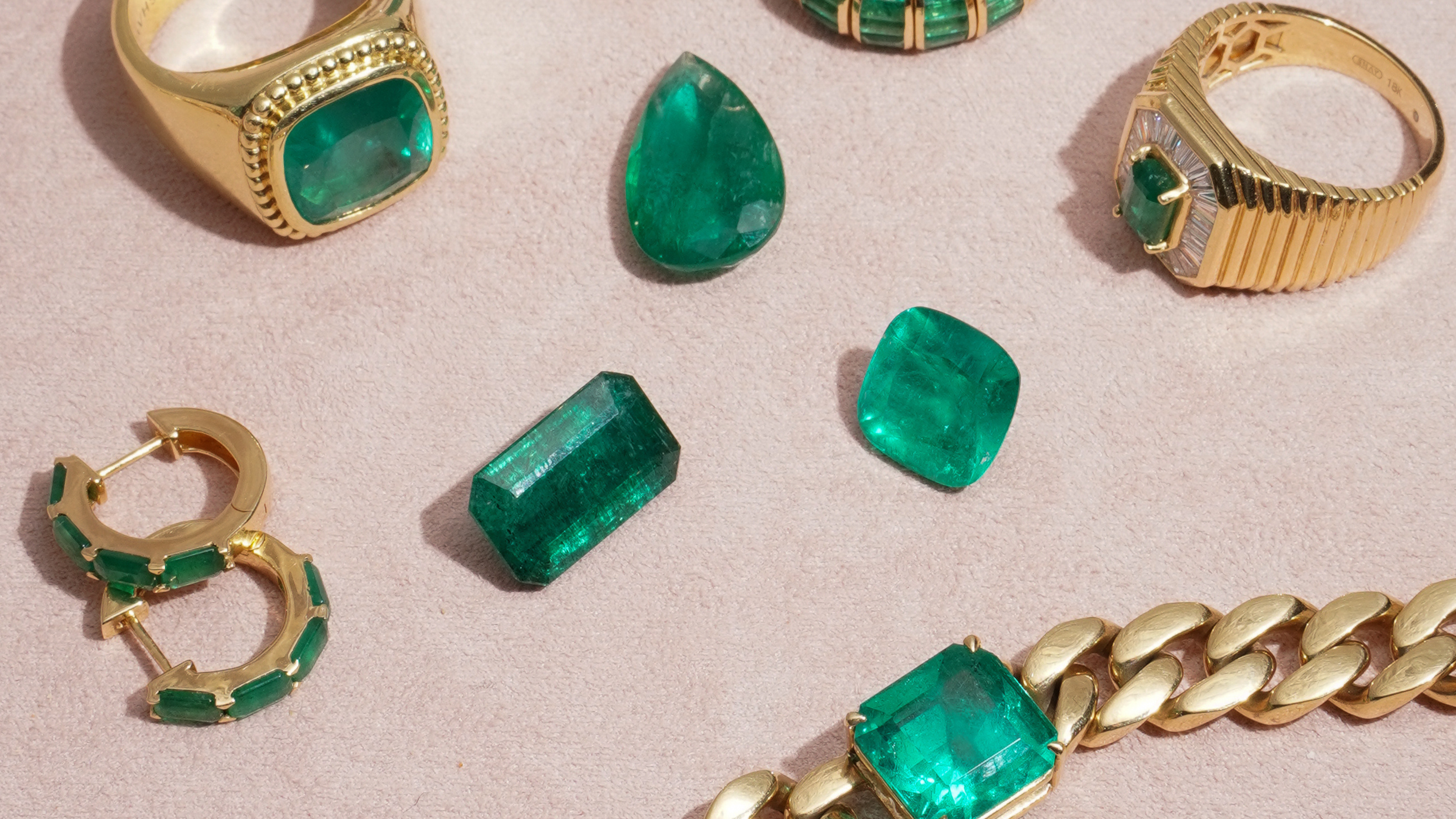
Most people picture one kind of emerald. They're picturing a Colombian emerald. Warm, slightly yellow-green, intensely vivid, the kind of color that looks lit from within even in a dim room. Colombia has been producing some of the world's most coveted emeralds for centuries.
Zambian emeralds are different in character. Cooler. More blue-green. Often deeper in tone, sometimes with higher apparent clarity, and because Zambia's Kagem mine is one of the world's largest, more consistently available at high quality. They were largely overlooked for decades. That's no longer the case.

Origin isn't a detail for the certificate. It determines the color you'll look at every day for the next 20 years: how it reads against your skin, how it sits in the metal you choose, how it looks under the specific light you live in. That's not a small thing.
"Your emerald's origin changes everything - including the color you'll spend every day looking at."
Some people are drawn to the vivid, slightly warmer glow of Colombian emeralds. Others love the deeper, cooler green of Zambian stones. Both are incredibly beautiful. Neither is better. It comes down to personal preference, the jewelry you wear most, and the kind of green you want to live with every day.
Inclusions — Rethink Everything
Why emerald inclusions matter - and why cracks are something entirely different
Gemologists have a word for what's inside an emerald. They call it jardin — French for garden. Because what you're seeing isn't damage. It's the internal landscape of a stone that took millions of years to form underground.
Every real emerald has inclusions. The ones that look perfectly clean? They've almost always been treated, typically with resin or cedar oil, to fill natural surface-reaching fissures and make the stone appear more transparent than it actually is. A standard industry practice. Not a secret. But worth knowing.
"A lightly included emerald with strong natural color is genuinely rarer than a 'clean' one that got there through treatment."
The inclusions aren't the flaw you're trying to avoid. They're part of what makes an emerald natural and unique. Once you understand that, the jardin stops being a compromise and starts being the proof.
A crack, however, is something different. Natural inclusions are expected in emeralds. Structural cracks that compromise the integrity or durability of the stone are not. That's an important distinction.
Yes, emeralds are more delicate than diamonds or sapphires because of their natural inclusions. That's real. The answer isn't to avoid them. It's to set them properly (bezel or halo over prong), wear them with awareness, and buy the stone for what it actually is.